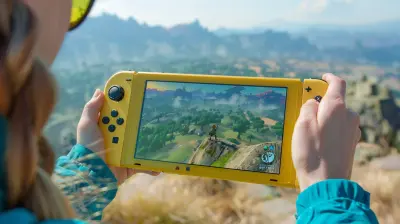
The Future of Game Controller Technology
24 June 2026
Gaming has come a long way—remember the days of joystick-only controllers and wired paddles? Fast-forward to today, and we’ve got wireless gamepads, haptic triggers, gyroscopes, and even motion sensors that track your every move. But, what’s next?
The future of game controller technology is a thrilling ride that’s just beginning. With advances in AI, motion tracking, cloud gaming, and even brain-computer interfaces, we're about to witness a revolution in how we interact with digital worlds.
So, buckle up! Let’s dive into what’s on the horizon for your thumbs, palms, and maybe even your mind.
A Quick Look Back: From Retro to Revolutionary
Before we peek into the future, let’s rewind for a second.Remember the NES controller? Two buttons and a D-pad—simple, straightforward, and honestly, a bit clunky by today’s standards. Over the decades, controllers evolved: analog sticks added precision, rumble packs brought feedback, and wireless connectivity gave us freedom.
Fast forward to now, and we’re looking at elite controllers, adaptive triggers, and ultra-low-latency wireless options. But gamers always want more—and rightfully so.
What Gamers Want: Precision, Immersion, and Customization
Let’s face it—gamers are picky. We want buttery-smooth precision, seamless connectivity, and enough immersion to make real life feel dull by comparison.The good news? Developers are listening.
The future of game controller technology is going to revolve around three major pillars:
1. Precision
2. Immersion
3. Customization
Let’s break these down, shall we?
Ultra-Precise Haptics: Feeling Is Believing
Today’s haptic feedback is already impressive. The PS5's DualSense controller raised the bar with adaptive triggers and nuanced vibration motors.But imagine this—your controller doesn’t just vibrate when you fire a gun; it lets you feel the texture of the surface you're walking on. Sand, snow, gravel—it’s not just visual anymore, it's tactile.
Companies like Immersion Corporation and HaptX are working on haptic systems that go beyond simple rumble. We’re talking about full-range force feedback that can simulate everything from the resistance of a sword swing to the recoil of a shotgun.
Yep, your hands are about to get a serious upgrade.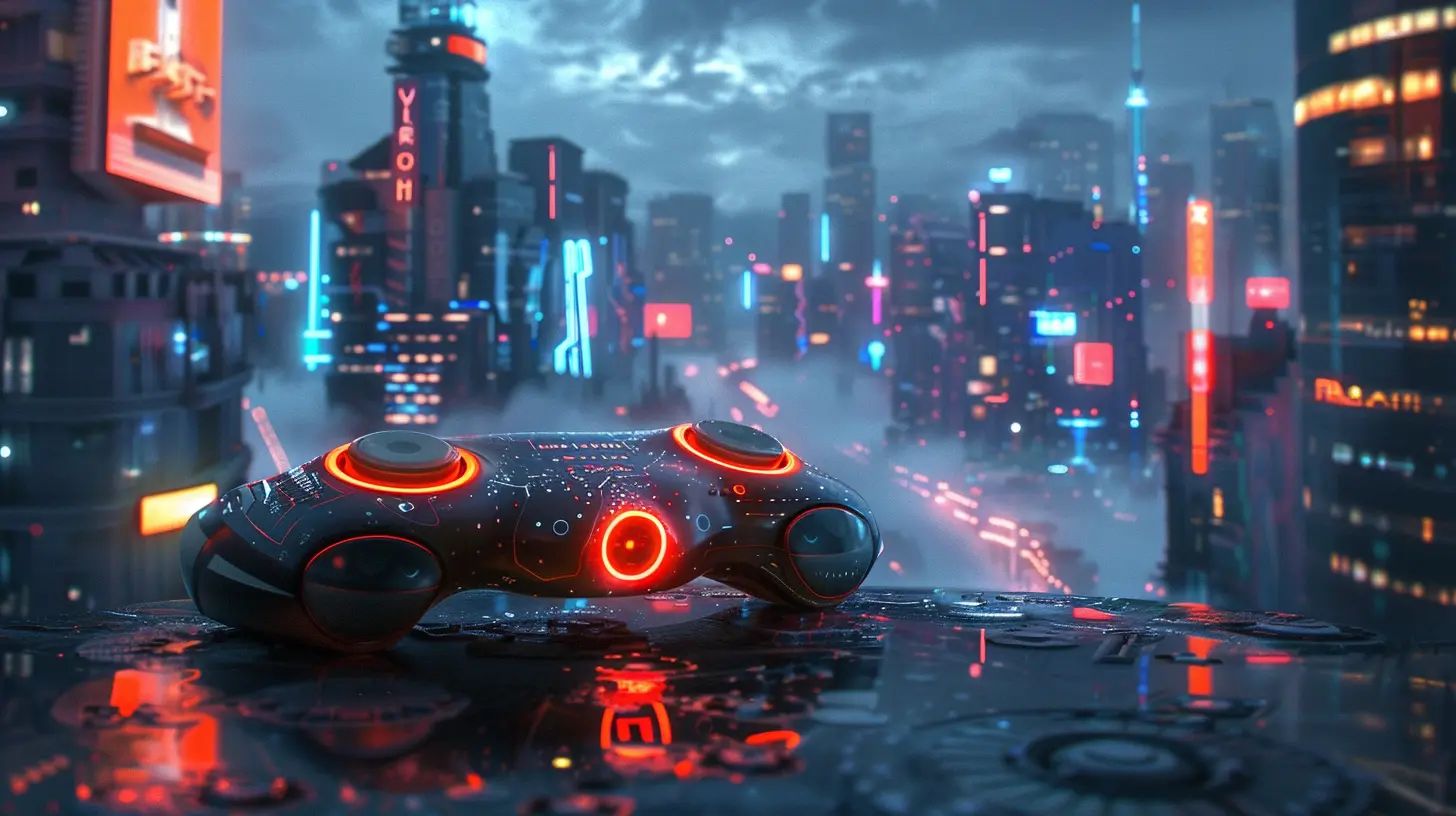
Motion Tracking and Gesture Control: Wave Goodbye to Buttons?
Ever played a game using VR hand-tracking? It’s wild. You reach out, and your virtual hand mirrors your real one. No controller in sight.While gesture control isn’t brand new—it’s been around since the Kinect and Wii days—what’s changing is the accuracy and responsiveness. Machine learning algorithms are now making gesture recognition far more precise, reducing lag and false positives.
In the future, we might ditch buttons for gestures altogether. Think Iron Man-style interfaces or Minority Report-level control. Want to reload? Just flick your wrist. Want to switch weapons? Do a little spin. It's fun, intuitive, and super futuristic.
Smart Controllers Powered by AI
You know how smartphones got smart? Controllers are heading that way too.Imagine a controller that learns how you play and adapts dynamically. Maybe it increases trigger resistance for you during certain boss fights or adjusts thumbstick sensitivity based on your in-game actions.
AI will analyze your gameplay and tweak settings in real-time. And not just that—it could help with accessibility, customizing inputs for players with different needs automatically. Adaptive controllers are already changing lives, but AI can take that even further.
Brain-Computer Interfaces (BCIs): Control With Your Mind
Okay, we’re going full sci-fi here—but hear me out.Brain-Computer Interfaces, or BCIs, let you control devices using brain signals. Sounds crazy, right? But companies like Neuralink, NextMind, and Valve (yeah, the Half-Life guys) are already experimenting with this.
Right now, it’s mostly experimental, but in the not-so-distant future, you might just think “jump” and your character leaps. No hands required.
Don't ditch your controller yet, but don’t be surprised when BCIs start becoming part of the gaming conversation in the next decade.
Modular and Customizable Controllers
Let’s talk about design.Not everyone has the same hands. Some folks have larger palms, others have unique mobility needs. The one-size-fits-all model? It’s becoming outdated.
Future controllers will likely be modular. Swap out a D-pad for a touchpad. Replace thumbsticks with trackballs if that’s your jam. Heck, you might even be able to 3D print your own controller shells to fit your hand perfectly.
Companies like Steam, Scuf, and Xbox Design Lab are already leaning into this space. Pretty soon, your controller will be as personal as your wardrobe.
Cloud Gaming and Virtual Controllers
Cloud gaming’s catching fire—literally and figuratively. With platforms like Xbox Cloud Gaming, GeForce NOW, and PlayStation Now, physical hardware is becoming less important.So what happens to the controller?
We might see the rise of virtual controllers—touchscreen overlays that mimic traditional inputs. Not ideal right now, but with haptics built directly into your phone or tablet, they could get surprisingly good.
However, cloud gaming also means your physical controller could become smarter—able to connect instantly with any device via the cloud and stream firmware updates on the fly.
Cross-Platform Compatibility Will Be the Norm
We’re all tired of buying separate controllers for different consoles, right?Future controllers will likely be universally compatible. Connect your PlayStation controller to your Xbox? Why not. Use your Switch Pro controller on your PC and have it auto-adjust layout? Absolutely.
Thanks to open-source drivers and standardized protocols like Bluetooth LE and USB-C, this dream is becoming a reality. It’s about time platforms started playing nice.
Biometric Feedback: Gaming That Knows How You Feel
Imagine your game knowing when you’re nervous, excited, or calm.Controllers in the near future might come equipped with biometric sensors—reading your heart rate, skin conductivity, and even pulse strength. This data could then be used to adjust your game.
In a horror game, if your heartbeat spikes, the AI might ease up on jump scares. Or in a stealth mission, if you're too calm, it might throw in a challenge to get your blood pumping.
Creepy? Maybe a little. Cool? Definitely.
Sustainability and Eco-Friendly Controllers
Let’s talk green tech.As we grow more eco-conscious, the materials that go into our tech matter more than ever. The future of controllers will likely see biodegradable plastics, recyclable components, and energy-efficient designs.
Some companies are testing solar-powered or kinetic-charging controllers that juice up just by being used. Imagine never having to plug in your gamepad again. That's the dream, right?
Plus, modularity (which we mentioned earlier) helps reduce e-waste since you can just replace a broken part instead of the whole thing.
AR Integration: Merging the Real and Virtual Worlds
Augmented Reality (AR) is on the rise, and controllers will have to keep up.Future controllers might include built-in cameras and sensors to interpret the environment. You could aim your controller at real-world objects, and your game would respond accordingly.
Think of playing a Pokémon-style AR game where your controller scans your coffee table to find a hiding monster. It turns every object in your room into an interactive experience.
Accessibility Comes Front and Center
The future of game controller tech isn’t just about shiny features—it’s about inclusion.We’re already seeing amazing progress with devices like the Xbox Adaptive Controller. But the next-gen takes it a step further: fully customizable layouts, voice-controlled features, eye-tracking, and pressure-sensitive buttons that adjust to user strength.
Gaming should be for everyone. And the future is making that more possible than ever.
The Controllerless Future?
With all this talk of BCIs, AR, and virtual gaming, you might be wondering—are physical controllers going extinct?Not quite.
While controllerless tech like VR hand-tracking and neural input are fascinating, the tactile feedback and muscle memory of holding a physical controller are hard to beat. They provide comfort, precision, and a tangible link to your game.
Controllers will evolve, but they’re not disappearing anytime soon.
Final Thoughts: Hold On to That Gamepad—But Expect Changes
So, where are we headed?In a nutshell: smarter, more immersive, and hyper-personalized controllers. The line between gamer and game will blur, and your controller will be the bridge—one that fits your hands, understands your playstyle, and reacts to your emotions.
Whether it’s through AI-powered adjustments, motion gestures, or even brainwaves, the future of game controller technology is shaping up to be mind-blowingly awesome.
So, keep those thumbs limber. You’re going to need them.
all images in this post were generated using AI tools
Category:
Game ControllersAuthor:

Francesca West
Discussion
rate this article
1 comments
Zarek McVicar
It's exciting to think about where game controller technology is headed. With advancements shaping our experiences, I can't wait to see how industry innovation enhances gameplay. Here's to more immersive adventures and new ways to connect with our favorite games!
July 4, 2026 at 4:16 AM
Francesca West
I completely agree. The potential for innovation in game controllers is thrilling, and I can't wait to see how it transforms our gameplay experiences. Here's to the future of gaming!