The Smartest Puzzles in Nintendo Game History
7 July 2026
If there’s one thing Nintendo knows how to do (besides making us yell at blue shells and fall off platforms), it’s building mind-bending puzzles that leave you scratching your head and grinning with satisfaction when you finally crack them.
Whether you grew up with the NES, got hooked with the Wii, or have recently jumped aboard the Nintendo Switch hype train, you’ve likely encountered a few puzzles that made you pause and think, “Wait… how am I supposed to solve this?!”
So, grab your Master Sword, stock up on Rupees, and prepare to flex your brain muscles as we take a nostalgic and nerdy deep-dive into some of the smartest puzzles in Nintendo game history.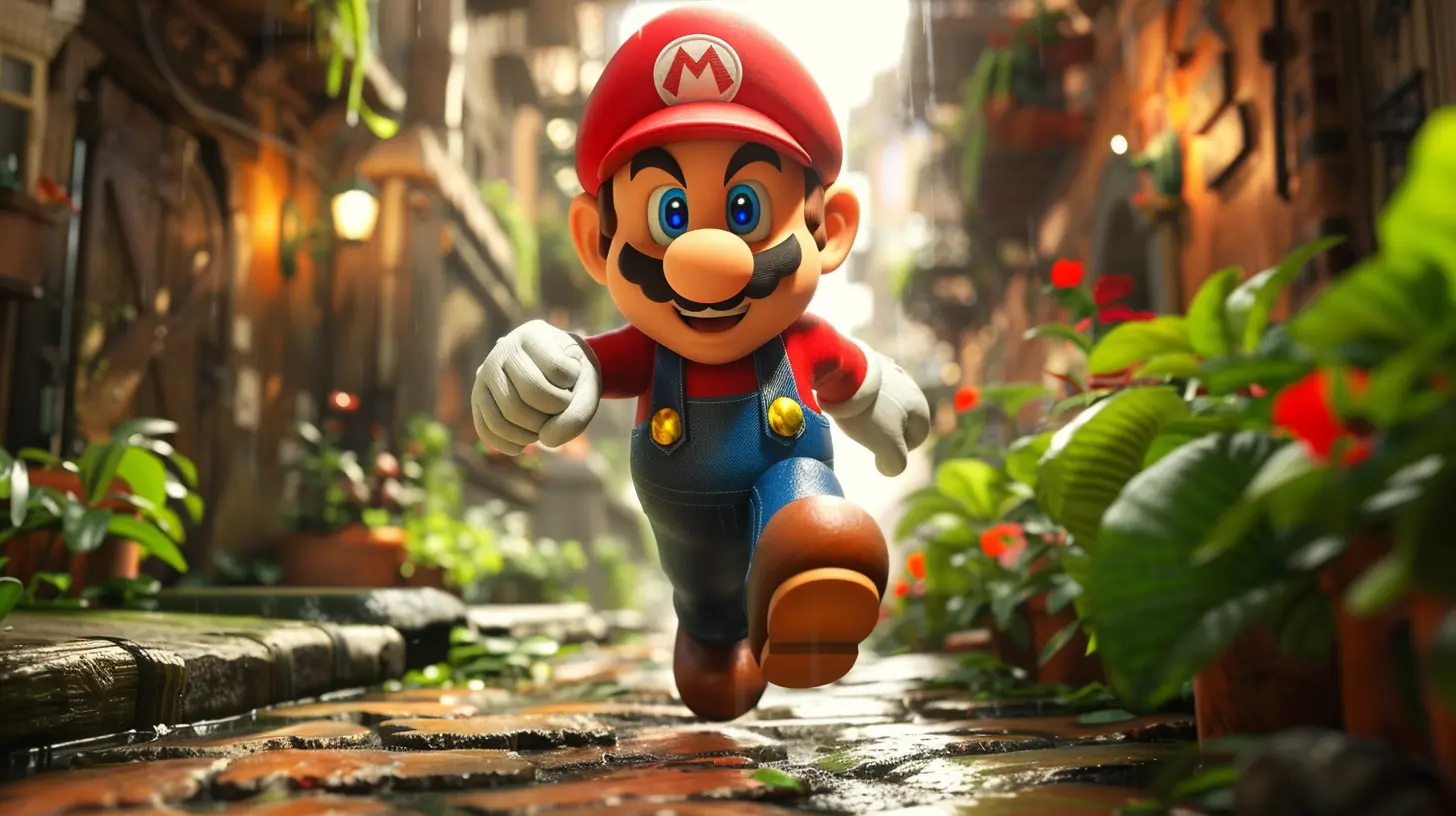
Why Nintendo Puzzles Hit Different ??
Before we dive into our favorite mind-melters, let’s talk about what makes Nintendo’s puzzles so memorable.Nintendo doesn’t just toss you a random Rubik's cube and call it a day. Their puzzles are often integrated right into the gameplay, the world, and the story. They're sneaky. They’re part of the environment, part of your journey. You don’t just solve them—you live through them.
And maybe that’s why they stick in our minds.
You’re not just flipping switches; you’re deciphering ancient texts, manipulating time, and even playing musical notes. That's next-level stuff.
The Legend of Zelda Series – Brainy Dungeons and Timeless Tricks
Let’s be real—Zelda games might as well be called “Puzzle Simulator: Hero Edition.” Every single entry in the franchise is packed with mind-twisting challenges. Some of these puzzles? They’re straight-up brilliant.? The Water Temple - Ocarina of Time
Yeah, yeah, you probably saw this one coming.The Water Temple is infamous. Not just for making players rip their hair out back in the N64 days, but also for its clever design. You have to raise and lower water levels across multiple floors of a dungeon while keeping track of where you’ve been and where you need to go.
Add in the Iron Boots (which used to require pause menu gymnastics), and this puzzle became an IQ test wrapped in frustration.
But once you mastered it? Oh, the satisfaction.
? Stone Tower Temple – Majora’s Mask
This one’s a brain-buster.The entire temple flips upside-down. Literally.
You have to solve puzzles in both orientations—right side up and upside-down. It messes with your sense of direction and forces you to think in 3D like never before. It's one of those puzzles that shows how Nintendo isn't afraid to get weird—and it totally works.
? Shrines – Breath of the Wild
Breath of the Wild took puzzle-solving in a whole new direction.Instead of stuffing all the puzzles into large dungeons, Nintendo gave us 120 shrines (!) scattered across Hyrule.
Each shrine is a mini-brain teaser. Some require clever use of physics (like using stasis to freeze objects and launch yourself), while others use motion controls, strategic resource management, and even deception.
Many players found themselves stumped—not because the puzzles were unfair, but because they asked you to break the rules you'd been taught.
Professor Layton Series – A Puzzle Playground in Your Pocket
Now we can’t talk about puzzle greatness without tipping our hat to the gentleman puzzle-solver himself: Professor Hershel Layton.This handheld series is a love letter to riddles and brainteasers.
? Puzzle Variety That Keeps You Guessing
From logic puzzles to visual tricks, Layton games mix it all up. Sometimes you'll rearrange matchsticks; other times you're solving crimes using deduction.What’s genius here is how each puzzle ties into the storyline. You’re solving mysteries, not just puzzles. It feels like you’re reading a novel and playing a game of Sudoku at the same time.
The challenge curve is just right, and there's always that “Aha!” moment waiting on the other side.
Metroid Series – Smart Design and Environmental Puzzles
Metroid might be better known for its atmosphere and exploration, but the series hides some truly clever puzzles in plain sight.? Metroid Prime - Scan and Discover
Metroid Prime adds investigative flavor to its puzzle design. Instead of giving you the solution, it makes you scan your environment, piece together clues, and figure out how to progress.You might need to find that one hidden panel, charge a beam, or time your movement through a deadly trap. It’s equal parts logic and reflexes.
? Morph Ball Mazes
Rolling around in ball form and zipping through tight mazes? It sounds simple but requires timing, observation, and spatial awareness.Some puzzles even required using bombs to bounce precisely or navigate vertical shafts.
It’s not your everyday puzzle. It’s... well, it’s very Metroid.
Super Mario Odyssey – Creative Puzzle Platforming
Mario games have always had an undercurrent of clever level design. But in Super Mario Odyssey, Nintendo turned the creativity dial to 11.? Possession Mechanics Meet Puzzle Solving
The whole idea of capturing enemies with Cappy adds a layer of puzzle-like gameplay. Each enemy you capture comes with a new ability, and the game challenges you to figure out which ability is the key to solving a particular section.Need to float across poison? Capture a flying Goomba. Need to break a stone block? Find a hammer-throwing enemy.
It’s basically puzzle-solving in disguise as action-platforming.
? Hidden Moons for the Win
Super Mario Odyssey is one big treasure hunt. And some Power Moons are... deviously hidden.You’ll need to decipher clues, interact with odd objects, and solve environment puzzles that feel more like riddles.
Not every puzzle hits you over the head—sometimes the smartest puzzles are the ones hidden in plain sight.
Pikmin Series – Strategy Meets Puzzle Solving
On the surface, Pikmin is a cute and quirky real-time strategy game. But peel back the layers, and you'll find some of the most strategic, puzzle-rich gameplay Nintendo has ever created.? Puzzle-Solving with Tiny Helpers
Each type of Pikmin has its own strengths. Red Pikmin are fireproof, Yellow can be thrown higher, Blue can survive water, and so on.To collect all the items, defeat enemies, and navigate obstacles, you’ll need to use the right combination of Pikmin types—at the right time.
It’s almost like managing a group project… but you’re the only one who knows what’s going on.
Time management, resource allocation, and puzzle-solving? Pikmin checks all the boxes.
Donkey Kong Country: Tropical Freeze – Rhythm and Logic
Donkey Kong games are famously tough, but Tropical Freeze adds some clever puzzle elements to its already challenging gameplay.? Puzzle Pieces and Secret Levels
Hidden puzzle pieces are scattered across the levels, many locked behind mini-puzzles involving timed switches, moving platforms, and pattern recognition.Some of these can leave you stumped for a while, especially if you're gunning for 100% completion. It feels like an escape room stuck inside a platformer.
Plus, the level design is so smooth and rhythmic, it almost tricks you into missing the hardest puzzles right under your nose.
Tetris 99 – The Puzzle That Fights Back
Okay, follow me here.Yes, Tetris is a classic puzzle game. But Tetris 99 turned the most iconic puzzle formula into a battle royale—literally.
? Puzzle and Pressure in Real-Time
You’re not just solving where blocks go. You’re managing attack strategies, defense, and timing. You’re watching other players. You’re thinking five moves ahead while 98 other people are trying to knock you out.It’s like speed chess crossed with falling bricks.
This game turns a solo puzzle experience into a chaotic, competitive thrill ride—and that’s pretty smart game design.
Pokémon Series – Gym Puzzles and Legendary Quests
Let’s not forget about the Pokémon games. Sure, we all love catching 'em all, but these RPGs sneak in some surprisingly smart puzzle design.? Gym Challenges Worthy of a Badge
Each Pokémon Gym often includes its own puzzle. Some ask you to press switches in the right order. Others require navigating icy floors, rotating platforms, or teleportation pads.The puzzles aren’t just in the way—they’re part of the gym leader's theme, which adds depth and immersion.
? Legendary Pokémon Hunts
Finding Legendary 'mons often turns into a scavenger hunt or a logic puzzle.In the Hoenn region, unlocking the Regis involved deciphering braille messages—literal braille. You had to find translations in-game or look them up. That’s some next-level puzzle commitment.
—
Honorable Mentions – Small but Genius Moments
We couldn’t fit everything in, but here’s a quick shout-out to a few smart cookies in Nintendo’s library:- ? Luigi’s Mansion – Mirror-based puzzles and ghostly gimmicks
- ? Advance Wars – Tactical problem-solving as brain-bending chess
- ? Captain Toad: Treasure Tracker – Rotate-the-world level design
- ? Paper Mario: The Thousand-Year Door – Dialogue-based logic riddles
—
Final Thoughts – Brains Over Brawn
Nintendo has always been about more than just fast reflexes and flashy graphics. Their best games challenge your mind in ways few others do. From masterpiece-level dungeon design in Zelda to the brainteasers in Professor Layton, Nintendo’s puzzle legacy runs deep.And the best part? They never feel like homework.
Solving a tough puzzle in a Nintendo game doesn’t just make you feel smart—it makes you feel like a hero. Like you earned it.
So next time you get stuck, don’t rage-quit. Take a breath, look around, and remember: the answer is probably right in front of you… if you’re willing to think outside the (question) block.
all images in this post were generated using AI tools
Category:
Nintendo GamesAuthor:

Francesca West
Discussion
rate this article
1 comments
Melanie McGowan
Nintendo redefines clever gameplay.
July 29, 2026 at 3:07 AM
Francesca West
Absolutely! Nintendo consistently brings innovation to puzzle design, making gameplay engaging and memorable.