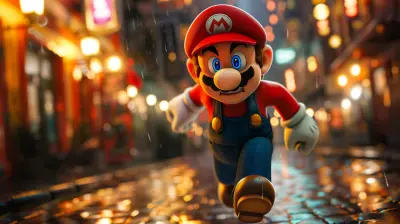
The Evolution of Game Controllers Over the Years
13 May 2026
Let’s take a minute and think about how far gaming has come. From pixelated screens and beeping sound effects to hyper-realistic visuals and surround sound — everything has evolved. But while graphics and gameplay get all the limelight, what about the humble game controller? You know, that thing you clutch in your hands during epic boss battles, all-night raids, or casual Mario Kart races.
The evolution of game controllers over the years is one heck of a wild ride. It's not just about buttons anymore — it's about ergonomics, motion sensing, haptic feedback, and wireless convenience. So, if you're a gamer (or even just controller-curious), buckle up, because we’re diving deep into the history, growth, and revolutionary changes that brought us from chunky joysticks to sleek, multi-functional input machines.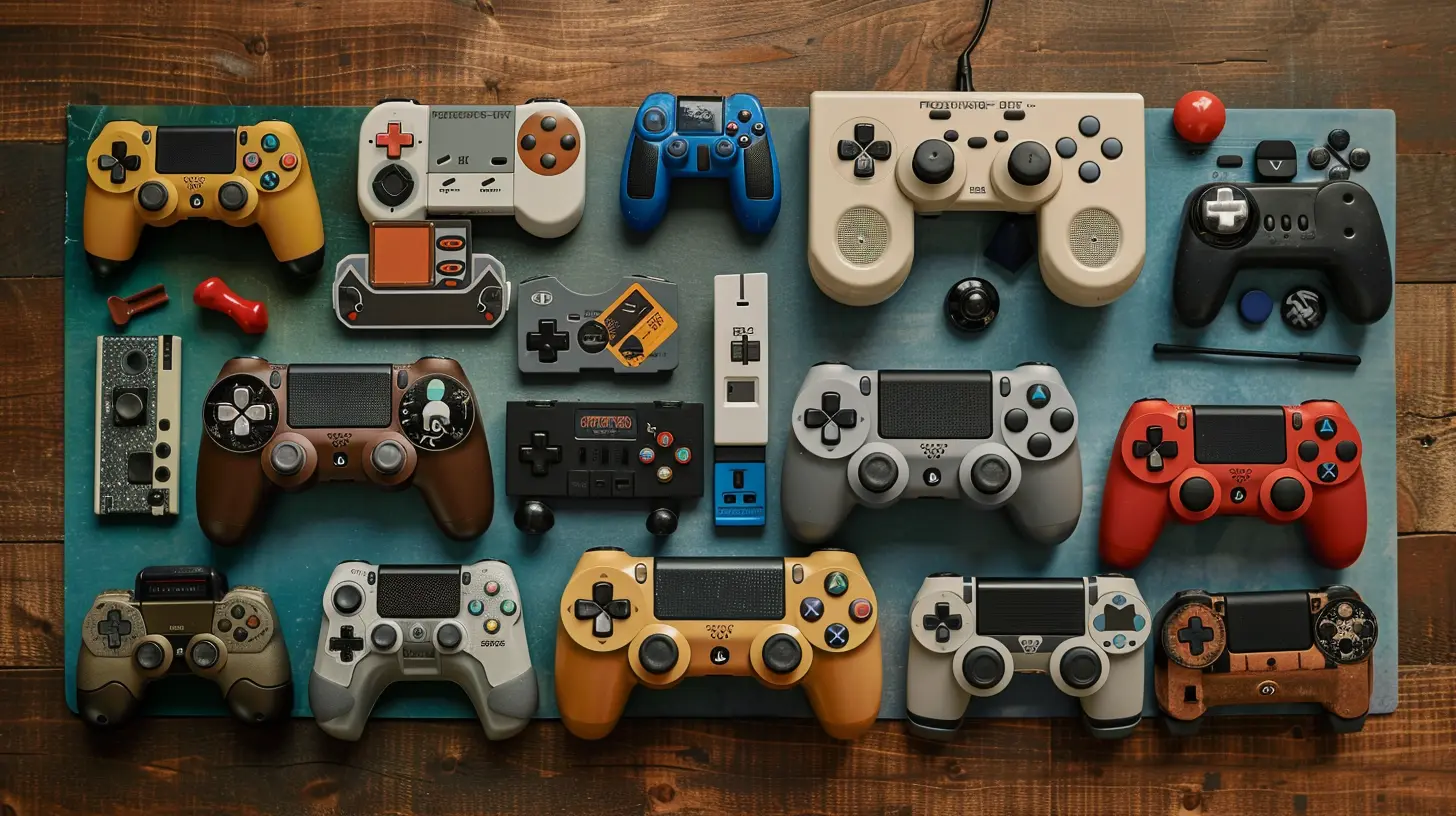
The Dawn of Game Controllers: Joysticks and Simplicity (1970s–Early 1980s)
Let’s rewind to the late '70s. The video game scene was just being born, and controllers were, well... primitive. The first commercially successful game console, the Magnavox Odyssey, debuted in 1972 with controllers that looked more like TV remotes than gaming devices. Two knobs, no buttons. That's it.Then came Atari's iconic joystick. If you ever played Pong or Asteroids, you'll remember this bad boy: a single stick and one red button. Simple, functional, but oh-so-limited. It was the wild west of controller design, and no one really knew what the "standard" should be yet.
But hey — it got the job done. At the time, players didn’t need hundreds of commands or complex movements. One stick. One button. Pure gameplay.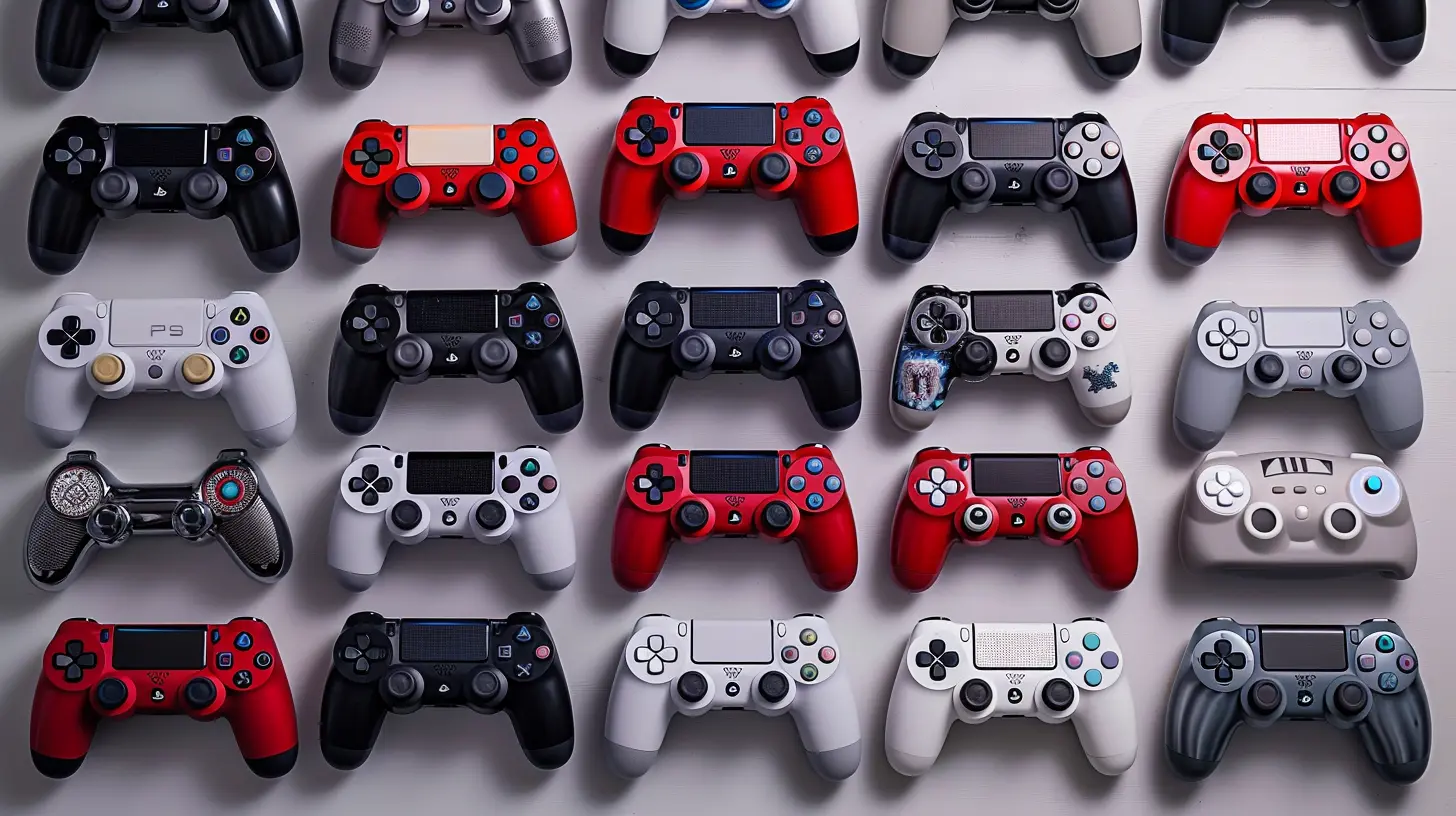
The Rise of the Directional Pad (D-Pad): The 8-Bit Era (Mid-1980s)
Enter Nintendo. When the NES (Nintendo Entertainment System) dropped in 1985, it changed everything. And one of its most revolutionary inventions? The D-Pad.That little cross-shaped piece of plastic may not look like much today, but it made gaming more precise and way more intuitive. The NES controller also introduced the now-familiar A and B action buttons, along with Start and Select. Simple? Yes. Groundbreaking? Absolutely.
This layout became the blueprint for almost every controller to follow. Sega followed suit with the Master System, tweaking things slightly, but by then, the D-Pad was here to stay.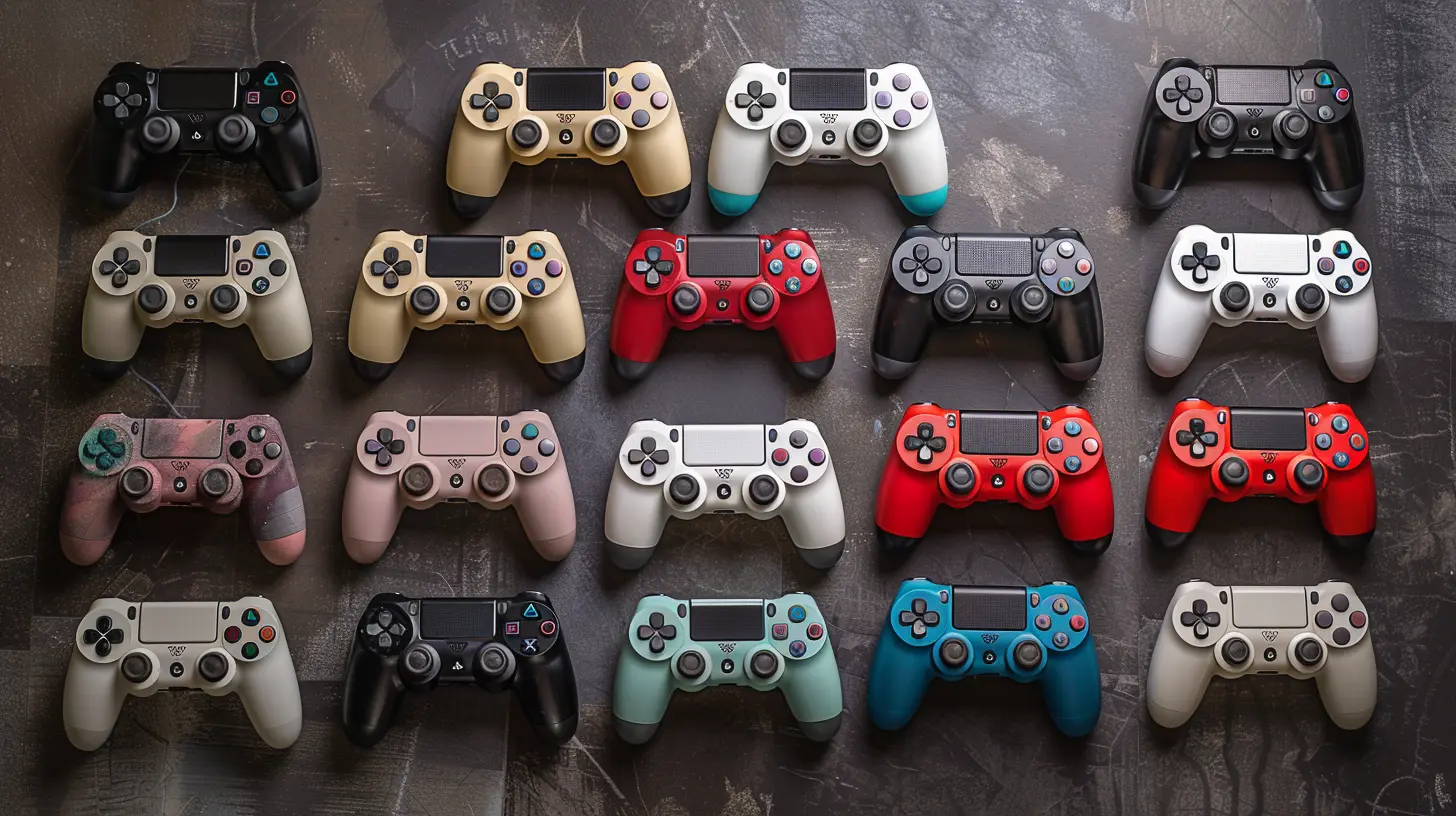
Ergonomics Take Center Stage: The 16-Bit Boom (Early 1990s)
By the time we hit the '90s, gaming consoles were flexing harder — better graphics, more complex gameplay, and characters that actually kinda looked human. This leap demanded better control schemes.Enter the SNES (Super Nintendo Entertainment System) controller. It built upon the NES layout and added X and Y buttons as well as shoulder buttons (L and R). This opened the door for more in-game actions without overcomplicating things. Turns out, more buttons = more control. Who knew?
Sega responded with a six-button Genesis controller that fighting game fans loved. Mortal Kombat anyone?
The focus during this era shifted toward comfort and functionality. Controllers started molding to the hand more naturally, ditching sharp edges for curves and grips. Playing for hours wasn’t just easier — it was more immersive.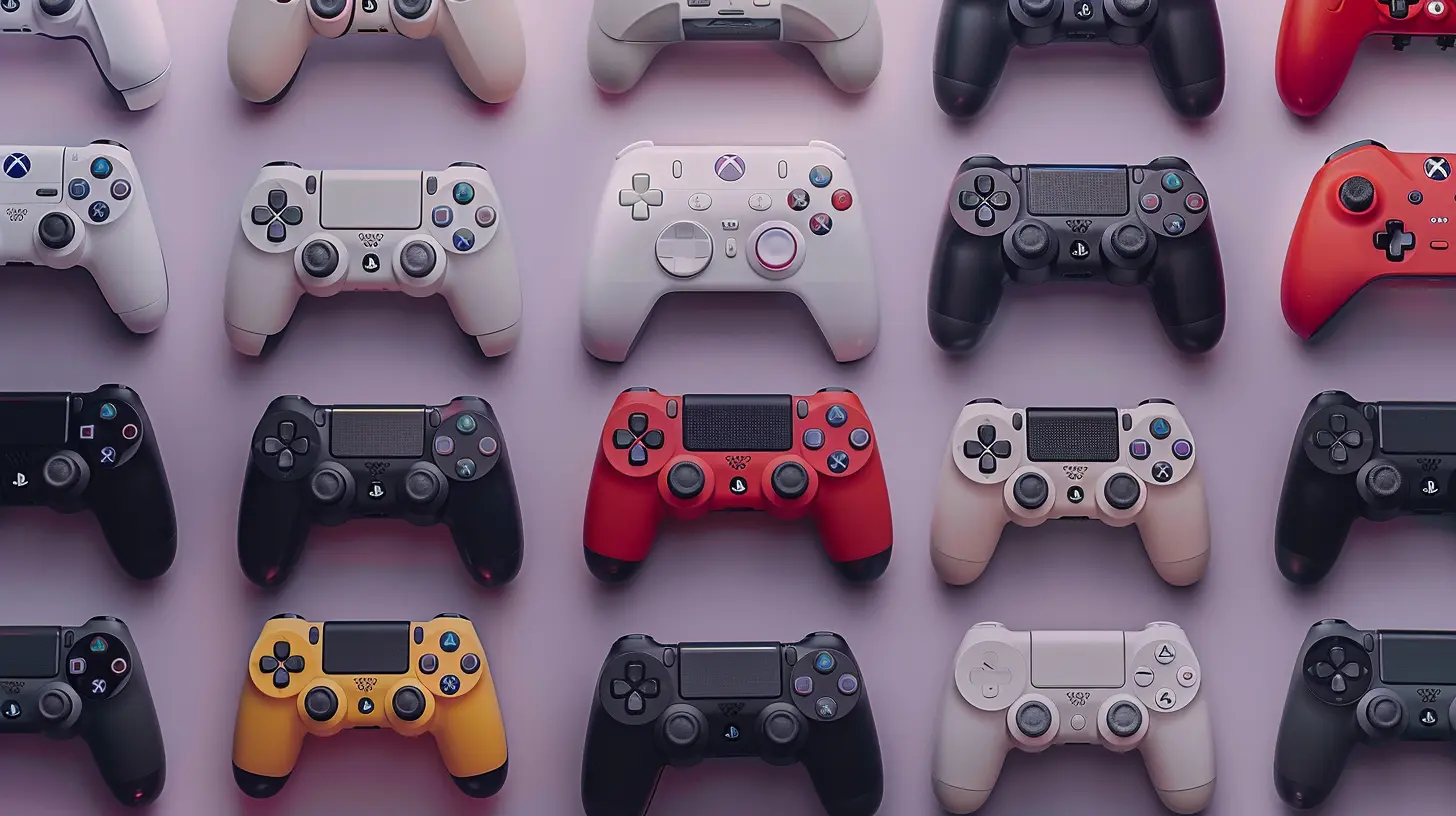
Enter the 3D Era: Analog Sticks & Rumble Packs (Mid to Late 1990s)
When games leaped into 3D, controllers had to evolve or get left behind. You can’t navigate a fully three-dimensional world with just a D-Pad and buttons — it’s like trying to drive a car with a spoon.Cue the revolutionary N64 controller. Yeah, it looked like a spaceship with three prongs, but it introduced the analog stick — a game-changer (literally). Suddenly, you had full 360-degree movement. Mario could tiptoe, run, or spin with varying intensity. The level of control blew minds.
Sony wasn’t far behind. The original PlayStation launched with a D-Pad-based controller, but by 1997, they dropped the Dual Analog Controller, quickly followed by the DualShock. With two analog sticks and built-in rumble feedback, it set a new gold standard.
Feeling your controller vibrate when a grenade went off? That was a first, and it changed player immersion forever.
The Wireless Revolution: Cutting Cords Like a Boss (Early 2000s)
Let’s be honest, nobody misses the controller cord spaghetti under the TV. Wireless gaming gave us freedom — couch-to-fridge without disconnecting? Yes, please.Nintendo kicked off wireless innovation with the WaveBird for the GameCube in 2002 — ahead of its time and surprisingly reliable. And then came the Xbox 360. Microsoft refined wireless technology and bundled it into every controller. Battery-operated at first, and eventually rechargeable, wireless became the norm.
Sony followed suit with the PS3’s Sixaxis controller. Although it had some hiccups (no rumble at launch — boo), it paved the way for the DualShock 3.
Wireless controllers gave players room to move, dance, and rage quit… gracefully.
Getting Physical: Motion Control Era (Mid to Late 2000s)
When Nintendo dropped the Wii in 2006, it flipped the script. Who knew grandma would be swinging a virtual tennis racket on Christmas morning?The Wii Remote (or "Wiimote") wasn’t just a controller — it was a wand. Motion controls brought new players to gaming and shifted the focus to movement-based interaction. Everyone from toddlers to retirees was getting into the action.
Microsoft’s answer? Kinect. No controller at all — just your body. Cool in theory, but it didn’t quite catch on. Sony entered motion territory too with PlayStation Move, but nothing quite matched the Wii’s cultural impact.
Though mostly a trend, motion control opened new perspectives on player engagement — and some of that DNA lives on in today’s tech.
The Modern Controller: Precision, Comfort, Customization (2010s–Now)
Today’s game controllers are like sports cars — sleek, powerful, and loaded with features.Let’s break it down:
? PlayStation DualSense (PS5)
Sony’s latest beast comes with adaptive triggers (resistance based on in-game actions), haptic feedback that’s scary realistic, and a built-in mic. It’s basically a sensory playground.? Xbox Series X Controller
Microsoft opted for refinement over revolution. Comfortable, with improved grip textures and a hybrid D-Pad, it’s a fan favorite. And thanks to Xbox’s commitment to backward compatibility, you can use old controllers on new systems. Win-win!? Nintendo Switch Joy-Cons & Pro Controller
The Joy-Cons are a versatile pair, detachable for multiplayer or combined for solo play. Great in theory, though prone to drift (ugh!). The Pro Controller, on the other hand, is solid — Nintendo’s most ergonomic controller yet.Customization is also huge now. Elite controllers let players swap sticks, paddles, tension levels, and button mappings. Controller personalization is no longer just about colors — it’s about control, precision, and play style.
Mobile & Cloud Gaming: Redefining Input
Got a smartphone? Then congratulations — you already have a “controller” on you 24/7.Mobile gaming has exploded, and now we see Bluetooth-compatible controllers made just for phones. Backbone, Razer Kishi — these make mobile gaming actually feel like console gaming. And with cloud services like Xbox Cloud Gaming and NVIDIA GeForce Now, you can play AAA titles on your phone, tablet, or even a smart fridge (okay, maybe not that last one… yet).
Controllers today must bridge platforms. One controller for console, PC, and mobile? Yes, it’s happening.
Accessibility & Inclusivity: Everyone Can Play
One of the most beautiful evolutions in gaming has been the focus on accessibility.Microsoft’s Adaptive Controller is a standout — a customizable input hub designed for gamers with limited mobility. It works with an array of external devices, ensuring that almost anyone can play.
Sony and Nintendo have also started addressing inclusive design, though the road is still long. But one thing's for sure: the controller landscape is finally shifting to be more welcoming for everyone.
Timeless Design Principles That Still Matter
Despite all the tech upgrades, some principles have never changed:- Comfort is King: No matter how advanced, a controller has to feel good in your hands.
- Responsiveness: Input lag is the enemy. Speed and accuracy are everything.
- Durability: Gamers are intense — controllers must survive the rage quits and marathon sessions.
- Simplicity vs. Complexity: The best controllers balance ease of use for newbies and deep control for pros.
So What's Next in Game Controller Evolution?
We’ve gone from clicky knobs to tactile, immersive masterpieces. So where do we go from here?- Haptic 2.0: Game devs are still exploring what the PS5’s haptics can do. Expect even more nuanced feedback soon.
- Mind-Controlled Gaming: It sounds sci-fi, but brain-computer interface tech is advancing fast.
- Full Immersion: Combining VR, motion tracking, and responsive gloves could make controllers feel obsolete… or even invisible.
The evolution of game controllers is far from over. It's a continuous journey, driven by innovation, player feedback, and that relentless push for immersion and control.
Wrapping It Up: The Controller’s Journey Is Ours Too
Game controllers aren’t just tools. They’re the literal connection between us and the digital worlds we love. They’ve grown up alongside us, shifting from simple input devices to sophisticated extensions of our hands. Each new generation brings us closer to feeling like we’re actually inside the game.Next time you pick up your controller, take a second to appreciate it — it’s the product of decades of creativity, engineering, and gamer passion. And who knows? The next leap in gaming might be sitting in your hands right now.
all images in this post were generated using AI tools
Category:
Game ControllersAuthor:

Francesca West
Discussion
rate this article
2 comments
Uriah McElveen
Game controllers have come so far!
June 15, 2026 at 3:09 PM
Francesca West
Absolutely! It's fascinating to see how technology and design have transformed the gaming experience.
Trinity Palmer
This article highlights the fascinating journey of game controllers, showcasing how design and technology have evolved. From the simple joystick to today's complex wireless designs, each innovation has enhanced player experience, offering new ways to engage with games. It's amazing to see where we started and where we're headed.
May 14, 2026 at 3:16 AM
Francesca West
I'm glad you enjoyed the article! It's incredible to reflect on how far we've come in gaming technology. The evolution of game controllers truly shapes our gaming experiences.