Nintendo Games That Changed the Industry Forever
19 May 2026
Let’s be real—if you’ve ever picked up a controller, you’ve felt Nintendo’s magic. Whether it was blowing into a cartridge to make it work (we’ve all done it) or throwing your controller in frustration during a Mario Kart blue shell ambush, Nintendo has been a part of our gaming hearts for decades.
Nintendo isn’t just a company; it’s a cornerstone of gaming history. From pixelated plumbers to open-world masterpieces, it has consistently pushed the boundaries of what's possible in the gaming world. But some titles didn’t just break boundaries—they utterly reinvented them.
So let’s talk about those monumental Nintendo games that didn’t just entertain us—they changed the whole dang industry.
The Legend Begins: Super Mario Bros. (1985)
Think back to the mid-80s. The video game industry was on life support. Then, out of nowhere, a little Italian plumber in red overalls showed up and saved the day.Super Mario Bros. wasn’t just a fun platformer—it redefined what a video game could be. Smooth side-scrolling, tight controls, vibrant worlds, and catchy music… this game was the full package. Suddenly, everyone wanted a piece of the action, and developers across the globe took notes.
Why It Changed Everything:
- Introduced precise and responsive platforming mechanics.- Created the modern game level structure.
- Became the blueprint for side-scrolling platformers.
Without Super Mario Bros., gaming might still be stuck in the arcade.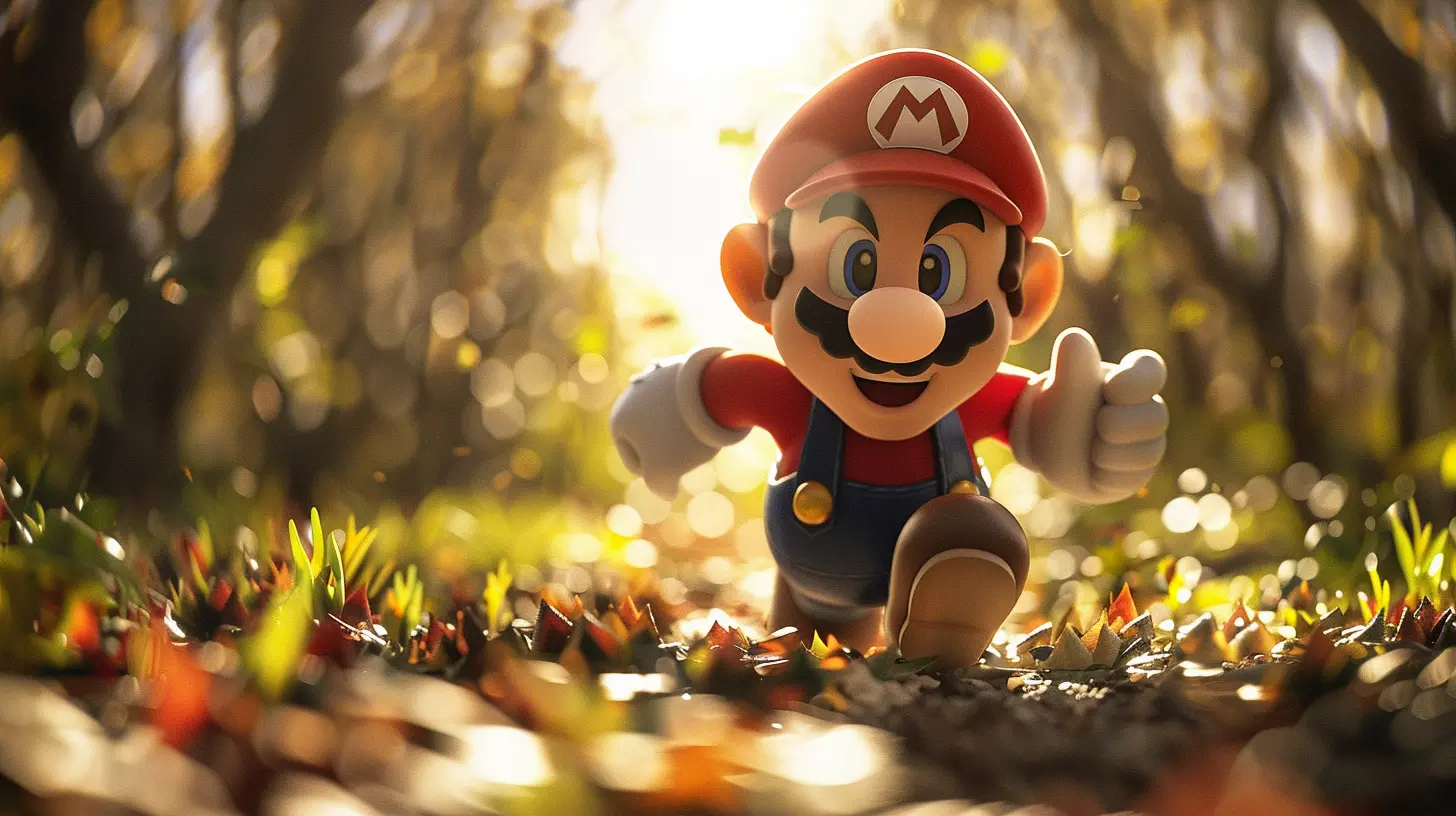
Evolving the Adventure: The Legend of Zelda (1986)
You’re dropped into a magical world with little direction and a simple message: it’s dangerous to go alone—take this. That line alone sent millions on a lifelong journey through Hyrule.Unlike the linear games of its time, The Legend of Zelda encouraged players to explore, experiment, and uncover secrets. It gave us our first real taste of open-world gaming.
Why It Changed Everything:
- Offered non-linear gameplay.- Introduced dungeon crawling and item-based progression.
- Created the concept of saving your game—yes, that was revolutionary!
Zelda didn’t just give us an adventure; it gave us freedom.
The Birth of Handheld Gaming: Tetris (Game Boy, 1989)
Okay, technically, Tetris wasn’t a Nintendo creation. But its marriage with the Game Boy? Pure genius.Nintendo bundled Tetris with the original Game Boy, and suddenly, every kid on the bus was glued to a tiny green screen, stacking blocks like their lives depended on it.
Why It Changed Everything:
- Turned handheld gaming into a mainstream phenomenon.- Showed the power of simple, addictive gameplay.
- Set the bar for mobile gaming before smartphones were even a thing.
Without this combo, who knows if handheld gaming would’ve ever taken off?
Gotta Catch 'Em All: Pokémon Red and Blue (1996)
When Pokémon Red and Blue landed on the Game Boy, everything changed. Kids weren’t just playing a game—they were entering a new universe filled with creatures to collect, trade, and battle.Let’s not forget the impact of the Link Cable. For the first time, handheld gamers could connect and compete in real-time. It was social gaming before online play even existed.
Why It Changed Everything:
- Created the “collect and trade” genre.- Fused RPG elements with creature collection in a unique way.
- Established one of the most successful media franchises ever.
From Game Boys to smartphones, Pokémon has been evolving ever since.
3D Platforming Perfected: Super Mario 64 (1996)
Imagine seeing Mario leap into a 3D world for the first time. It wasn’t just a game—it was a revelation.Super Mario 64 wasn’t the first 3D game, but let’s be honest—it was the first one that nailed it. Its fluid camera controls, analog movement, and sandbox-style level design were way ahead of the curve.
Why It Changed Everything:
- Introduced fully explorable 3D environments.- Revolutionized camera control with the “Lakitu camera.”
- Set the gold standard for 3D platformers for decades.
Even today, developers reference it when crafting new platform games. That’s staying power.
The Evolution of Storytelling: The Legend of Zelda: Ocarina of Time (1998)
If Zelda on the NES was the start of an adventure, then Ocarina of Time was the epic saga brought to life.For many, Ocarina of Time was their first taste of cinematic storytelling in a game. From riding across Hyrule Field on Epona to facing off against Ganondorf, this game made you feel like you were truly part of a legend.
Why It Changed Everything:
- Mastered 3D adventure game design.- Introduced the lock-on targeting system (Z-targeting).
- Raised the bar for narrative and emotional storytelling in games.
This wasn’t just a game—it was an experience.
Gaming Goes Social: Super Smash Bros. (1999)
Have you ever screamed, “Down-B with Kirby!” in a crowded living room? Then you already know the impact of Super Smash Bros.By throwing Nintendo’s most beloved characters into a chaotic brawler, it brought friends (and sometimes enemies) together. It was easy to pick up, chaotic to master, and endlessly fun.
Why It Changed Everything:
- Created a new kind of party fighting game.- Mixed accessibility with skill-based gameplay.
- Became a staple for competitive gaming and esports.
Smash didn’t just create a party— it built a community.
Mobile Magic: Animal Crossing: Wild World (2005)
While the original Animal Crossing dropped earlier, it was Wild World on the Nintendo DS that really took things to the next level.Here’s a game with no enemies, no “end,” and no stress—just you, your animal neighbors, and your mortgage to Tom Nook.
It normalized chill, slow-paced life simulators and proved that games didn’t have to be about winning or losing.
Why It Changed Everything:
- Promoted casual, stress-free gameplay.- Advanced the concept of real-time gameplay.
- Built one of the most loyal, wholesome communities in gaming.
It also paved the way for the life sim boom we see today—and yes, we’re looking at you, Stardew Valley.
A New Era in Motion: Wii Sports (2006)
Wii Sports was the unexpected MVP of the seventh generation. Packaged with the Wii console, it was simple, fun, and something your grandma could play. Seriously, Grandma was out there bowling strikes like a champ.This game changed how people viewed gaming—no longer a niche hobby, but something anyone could enjoy.
Why It Changed Everything:
- Introduced motion controls to the masses.- Showed the casual market was legit.
- Became a cultural phenomenon, with retirement homes even hosting tournaments.
Wii Sports took the idea of accessibility and ran with it, showing that gaming isn’t just for “gamers.”
Open World Redefined: The Legend of Zelda: Breath of the Wild (2017)
When Breath of the Wild launched alongside the Nintendo Switch, it felt like the world collectively gasped.Here was a Zelda game that threw away the old rulebook. No more hand-holding. No more rigid dungeons. Just you, a vast open world, and the freedom to explore however you wanted.
Why It Changed Everything:
- Reinvented open-world design with a focus on freedom and physics.- Inspired developers across genres, including Western RPGs.
- Redefined what a Zelda game could be.
BOTW didn’t just raise the bar—it created a whole new one.
A New Kind of Creation: Super Mario Maker (2015)
Ever dreamed of building your own Mario levels? Super Mario Maker made that dream real.Suddenly, players could become designers, sharing their masterpieces (and nightmare levels) with the world. It blurred the line between developer and gamer, and it was glorious.
Why It Changed Everything:
- Popularized user-generated content in console games.- Offered infinite replayability through community creations.
- Gave creative power directly to the players.
It proved that sometimes, the community can make the best content.
Turning Isolation Into Connection: Animal Crossing: New Horizons (2020)
Launched at the start of a global pandemic, Animal Crossing: New Horizons gave us a digital hug when we needed it most.People threw birthday parties, weddings, and even political rallies on their virtual islands. It wasn’t just a game—it was a safe space.
Why It Changed Everything:
- Became a cultural and social phenomenon during COVID-19.- Showcased the emotional value of gaming communities.
- Encouraged social connection in a time of isolation.
It reminded us that games aren’t just for fun—they’re also a way to feel together, even when we’re apart.
Final Thoughts
Nintendo doesn’t just make games—it shapes the way games are made, played, and loved.These titles didn’t just entertain us; they redefined genres, introduced new mechanics, and brought millions into the gaming world. And the best part? Nintendo isn’t done yet. With each new console, each new experiment, they continue to challenge the status quo. They’re not chasing trends; they’re creating them.
So, next time you boot up your Switch or dust off your old NES, remember—you’re not just playing any game. You’re becoming part of a legacy that’s changed the industry forever.
all images in this post were generated using AI tools
Category:
Nintendo GamesAuthor:

Francesca West
Discussion
rate this article
2 comments
Logan Lewis
Nintendo's innovative approach, from the introduction of the D-pad to the revolutionary gameplay mechanics in titles like Super Mario and The Legend of Zelda, reshaped the gaming landscape. Their emphasis on player experience set new standards that still influence game design today.
August 23, 2026 at 4:13 AM
Francesca West
Absolutely, Nintendo's focus on creativity and player experience has left a lasting mark on gaming. Their innovations really did change the game for everyone.
Samira McVey
It's fascinating to see how Nintendo shaped gaming. Each title brought something unique that still influences today's games. What a legacy!
May 29, 2026 at 3:10 PM
Francesca West
Absolutely! Nintendo's innovation set the stage for so many aspects of gaming we enjoy today. Their legacy is truly remarkable.