Games That Prove Nintendo is a Master of Level Design
30 October 2025
If you've spent any time gaming in your life, chances are you've played a Nintendo game. Whether it's jumping into warp pipes with Mario, flying through space with Samus, or exploring dungeons with Link, Nintendo’s masterpieces have likely left an impression on you. But have you ever stopped to consider why these games feel so… right? The answer lies in the magic of level design.
Nintendo doesn’t just design levels—they craft them. Layer by layer, experience by experience. From the very first Goomba in Super Mario Bros. to the intricate puzzles of The Legend of Zelda: Breath of the Wild, Nintendo has mastered the art of guiding players without ever holding their hands. Let’s dive into some iconic games that prove, without a doubt, that Nintendo is a master of level design.
What Makes Nintendo’s Level Design So Special?
Before we jump into game specifics, let’s talk about what sets Nintendo apart. Their game design philosophy tends to revolve around a few core ideas:- Teach through play (without tutorials)
- Start simple, build complexity
- Encourage exploration
- Reward curiosity
- Balance challenge with fun
Unlike games that dump all the buttons and mechanics on you upfront, Nintendo eases you in. It’s like learning to swim, but the pool is shallow at first, and there’s always something exciting just a few strokes away.
Now, let’s look at the crown jewels — the games that scream, “Hey world, Nintendo knows what it’s doing.”
1. Super Mario Bros. – The Original Blueprint
Let’s start with the game that defined video game level design: the original Super Mario Bros. on the NES. World 1-1 isn’t just famous — it’s practically a lesson plan for game designers.Why It Works:
- No words, no tutorials. You instinctively move right, encounter a Goomba, jump over it or land on it. Boom — you’ve just learned two mechanics!- Progressive discovery. The first coin block. Then three in a row. Then a hidden block. It’s a steady drip-feed of ideas.
Nintendo’s genius lies in that slow burn. Every hazard, platform, and power-up teaches you something new. It’s like Nintendo is whispering, “Hey, you’ve got this,” after every little victory.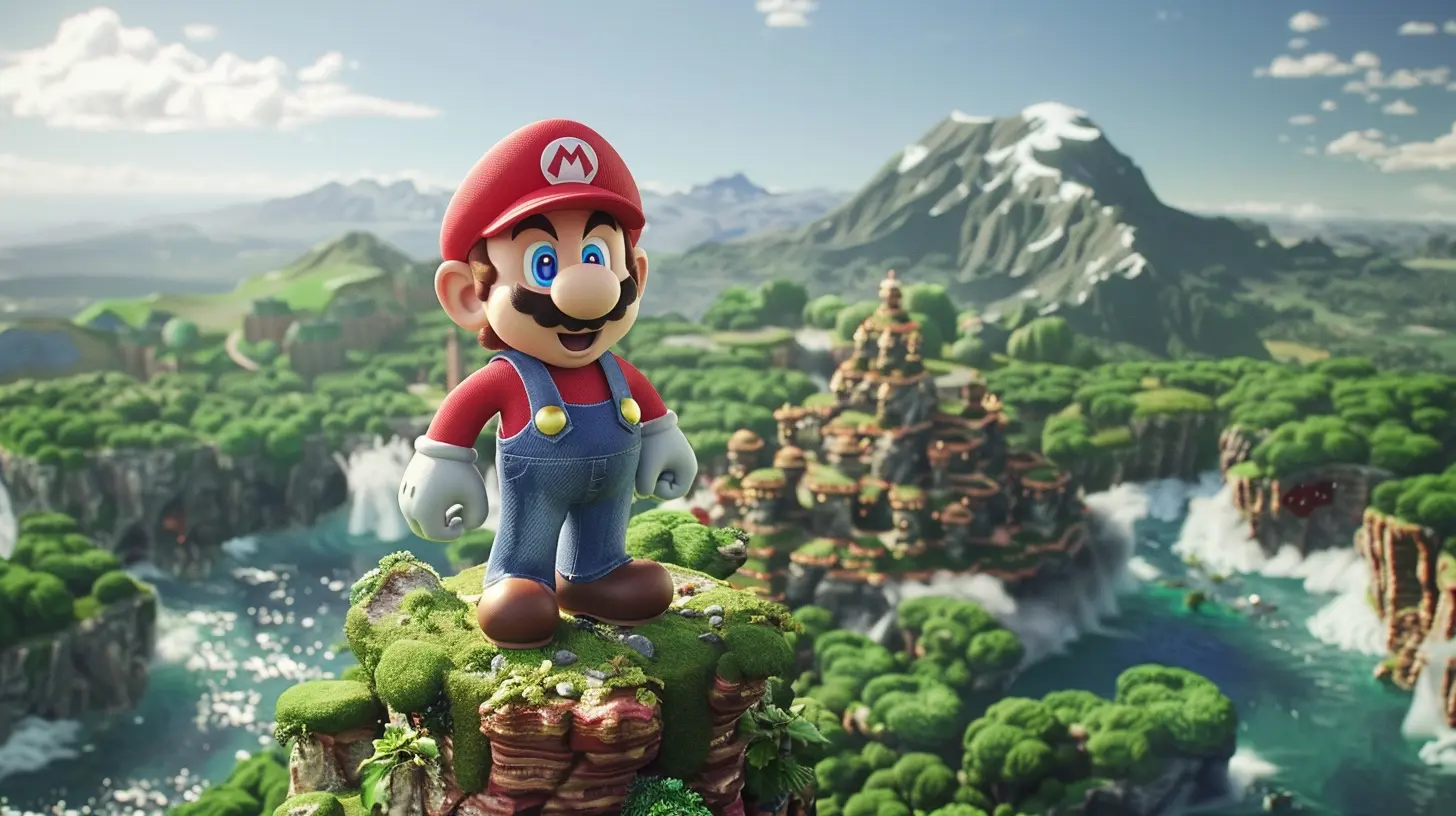
2. The Legend of Zelda: A Link to the Past – Masterclass in Dungeon Design
The SNES classic isn’t just a nostalgic trip; it’s a clinic in level structure. Each dungeon in A Link to the Past presents new mechanics and tools that literally reshape how you interact with the world.Why It Works:
- Dungeons as puzzles. Each one is a self-contained sandbox of ideas. One dungeon might introduce the hookshot, another the fire rod — and you’ll need to master them fast.- Non-linear exploration. It’s not just about finding keys and doors. It’s about figuring out the order — the logic.
- Tactile progression. As you conquer puzzles, walls literally shift, bridges emerge, and secret paths open.
This isn’t just clever — it’s deeply satisfying. It rewards your brain and makes you feel like a genius for solving its mysteries.
3. Super Mario Galaxy – Platforming Among the Stars
Imagine taking traditional Mario platforming and then twisting it around tiny planets with their own gravity. That’s Super Mario Galaxy. It’s bold, wild, and incredibly inventive.Why It Works:
- Gravity as a mechanic. Each level redefines what “up” and “down” even mean. It keeps your brain on its toes.- One idea per galaxy. Each level introduces a bite-sized new mechanic — and just when you master it, a new one is introduced. No filler.
- Perfect pacing. The levels don’t overstay their welcome. They’re short enough to feel fresh, but long enough to feel rewarding.
It’s Mario like you've never seen before, and that freshness is thanks to deliberate, tight level design choices.
4. Metroid Prime – Mastering 3D Metroidvania Structure
Transitioning a beloved 2D series into 3D is risky business. But with Metroid Prime, Nintendo (in partnership with Retro Studios) didn’t just adapt Metroid — they redefined it.Why It Works:
- Environmental storytelling. The world tells its own story without saying a word. You feel like an archaeologist piecing together lost history.- Backtracking with purpose. Yes, you revisit old areas — but now you’ve got new tools, and suddenly, new paths open up. That door you walked past hours ago? Now it matters.
- Seamless world-building. No loading screens. No hand-holding. Just one massive, interconnected world.
It’s dark, it’s immersive, and it rewards patience and curiosity. Metroid Prime’s level design is like a slow-cooked stew — rich, complex, and deeply satisfying.
5. Donkey Kong Country: Tropical Freeze – Precision Meets Personality
If you’ve played this one, you already know how criminally underrated it is. Tropical Freeze is platforming perfection, wrapped in charming visuals and a toe-tapping soundtrack.Why It Works:
- Rhythm and flow. Each level feels like a dance. The enemies, the jumps, the hazards — they’re choreographed.- Environmental storytelling. Levels evolve in real-time. A calm beach turns into a torrential storm mid-level. You don’t just play the level; you experience it.
- Hidden secrets. The game is loaded with collectibles and alternate paths — but they’re never cheap. You earn them with skill and awareness.
This is Nintendo at its most playful and polished. Every level feels like a handcrafted love letter to the genre.
6. The Legend of Zelda: Breath of the Wild – Open-World, Reimagined
Now, this one shook the industry. Breath of the Wild broke almost every convention the series was known for — and in doing so, reinvented open-world level design.Why It Works:
- No invisible walls. If you see a mountain, you can climb it. That shrine in the distance? Go there. It’s radical freedom.- Physics-based puzzles. Instead of pre-determined solutions, the game gives you tools and lets your brain do the work.
- Layered exploration. Shrines, Korok seeds, enemy camps, treasure chests — everywhere you go feels meaningful.
Here, Nintendo turned a massive world into one giant level. And the crazy part? Every corner feels thought-out and worth visiting. That’s not just good level design — that’s legendary.
7. Super Mario Maker Series – A Peek Behind the Curtain
Ever wanted to peek into how Nintendo does it? Super Mario Maker and its sequel pull back the curtain and hand you the tools.Why It Works:
- Teaches through creation. As you struggle to design good levels, you gain newfound respect for what makes Nintendo’s work so special.- Community-driven challenges. You get to play thousands of levels made by fans — and learn what works (and what doesn’t).
- Endless creativity. It’s a living, breathing showcase of Nintendo-inspired creativity.
Mario Maker proves that there’s so much more going on in Nintendo’s level design than meets the eye.
8. Pikmin 3 Deluxe – Real-Time Strategy Done Right
Now let’s talk something different: strategy. Pikmin 3 might not be what you think of when you hear “level design,” but its world design is incredibly tight.Why It Works:
- Time pressure. You’ve only got a limited time each day, so planning and pathing matter.- Environmental hazards. You’ll need to use the right Pikmin types at the right time — or suffer the consequences.
- Puzzle-like layouts. The world is like one big interconnected jigsaw puzzle.
It’s like playing in a beautiful, alien garden where every decision matters.
9. Luigi’s Mansion 3 – A Haunted Design Delight
Luigi’s Mansion 3 gives us a delightful blend of spooky and silly. But beyond the visuals, the level design here is top-notch.Why It Works:
- Vertical exploration. Every floor in the haunted hotel is its own themed world with unique mechanics.- Gooigi mechanics. Solving puzzles with two characters adds layers of complexity without confusion.
- Environmental interactivity. Almost everything can be sucked, blown, or slammed. It keeps the player constantly engaged.
Who knew ghost-hunting could double as a masterclass in game design?
What We Can Learn from Nintendo’s Level Design
Nintendo doesn’t just build levels — they build experiences. They think about how the player feels, what the player knows, and what the player wants to do next. That’s rare. That’s special.Here’s the secret sauce:
- Start with one simple idea.
- Explore it from every angle.
- Introduce risk and reward.
- Layer in complexity.
- Keep it fun, always.
And above all — trust your player.
Final Thoughts
Whether you’re platforming as a mustached plumber, solving puzzles in Hyrule, or navigating alien planets, Nintendo’s level design always has a purpose. It teaches you, challenges you, rewards you, and most importantly — it respects your time.So, the next time you play a Nintendo game, take a moment to appreciate just how much thought went into guiding your journey without ever needing a map or a marker. That’s the magic of Nintendo. And honestly? Few do it better.
all images in this post were generated using AI tools
Category:
Nintendo GamesAuthor:

Francesca West
Discussion
rate this article
2 comments
Dorothy McClure
Great article! Nintendo’s knack for level design truly shines through in each game. Their ability to blend challenge with creativity keeps players coming back for more. Can’t wait to dive into these classics!
March 24, 2026 at 5:14 AM
Francesca West
Thank you so much! I'm glad you enjoyed the article—Nintendo's level design really is unmatched! Happy gaming!
Michelle McClary
Nintendo consistently showcases exceptional level design through innovative mechanics, memorable environments, and engaging gameplay. Titles like "Super Mario" and "The Legend of Zelda" highlight their mastery in creating immersive player experiences.
October 30, 2025 at 3:44 AM
Francesca West
Thank you for your insightful comment! Nintendo's ability to blend innovative mechanics with captivating environments truly sets their games apart and creates unforgettable experiences.