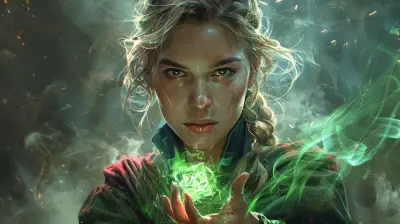
Exploring the Lore of Nintendo’s Most Mysterious Worlds
11 August 2026
Let’s be real—when someone mentions Nintendo, we instantly think of familiar faces like Mario, Link, and Pikachu. But there’s so much more lying beneath the surface of this gaming juggernaut. Nintendo has crafted some of the most bizarre, cryptic, and downright mysterious worlds in gaming history. And guess what? Most of us have barely scratched the surface.
In this deep dive, we’re unraveling the hidden lore, strange timelines, and secret backstories behind Nintendo’s most enigmatic universes. So buckle up, because things are about to get weird, wild, and wonderfully obscure.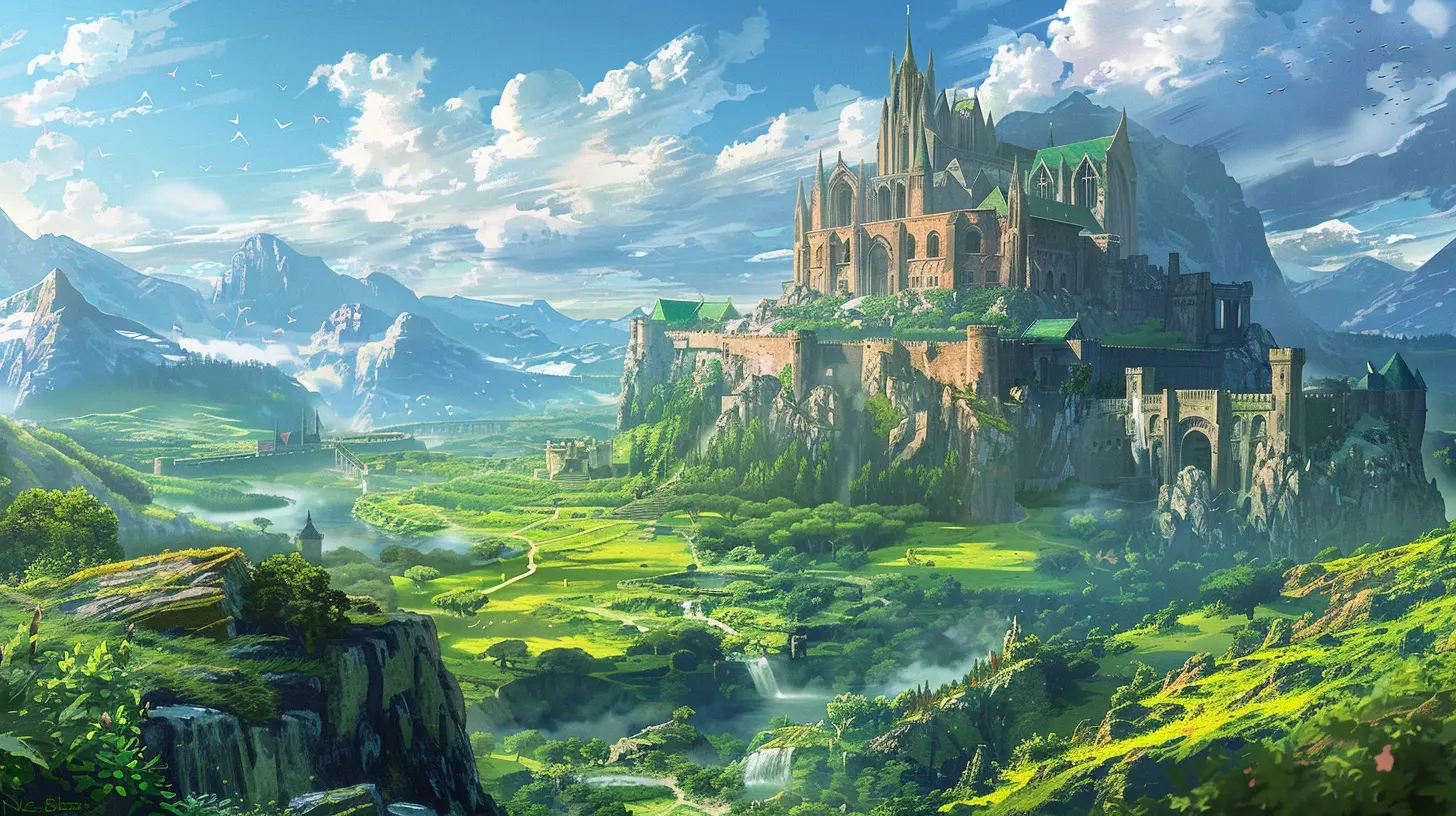
The Depths of The Legend of Zelda: A Timeline That Makes Your Head Spin
Let’s kick things off with the obvious choice—The Legend of Zelda.Wait, How Many Links Are There?
If you've ever tried to piece together the Zelda timeline, you probably ended up with a headache and a dozen tabs open. That’s because the timeline splits. Yes, it literally forks into three separate branches depending on Link’s success or failure in Ocarina of Time.- In one timeline, Link is defeated. The world descends into chaos (A Link to the Past, Link's Awakening).
- In the second, he wins and goes back to his childhood (Majora’s Mask, Twilight Princess).
- In the third, he wins and leaves, but the future he saved continues without him (The Wind Waker, Phantom Hourglass).
So yeah, the same hero dies, wins, and walks away—depending on how you look at it. Confusing? Definitely. Cool? Absolutely.
Hyrule Isn’t Just a Kingdom—It’s a Multiverse
Hyrule isn’t just one place; it’s been flooded, cursed, split by time, and threatened by dimensional tears. The goddesses—Din, Nayru, and Farore—created the world, left behind the Triforce, and seemingly dipped. Kind of like making a lasagna, leaving it in the oven, and going on vacation.The residents of Hyrule? They’re constantly cleaning up the mess. And Link, our ever-silent protagonist, seems to be reincarnated whenever things go sideways. Is he a spirit? A title passed down? Nintendo’s been teasing us for decades, but the mystery only adds to the charm.
The Haunting Universe of Metroid: A Space Opera Filled With Tragedy
If Zelda is fantasy, Metroid is space horror. Think Ridley Scott meets 8-bit pixels.Samus Aran’s Tragic Past
Samus isn’t just a cool armored space bounty hunter. Her backstory reads like a tragic sci-fi novel. Her home? Destroyed. Her family? Gone, thanks to Space Pirates. Raised by the Chozo—an alien bird race with tech far beyond human comprehension—Samus is a hybrid warrior with both human and Chozo DNA.And it gets darker. The Metroids? Bioweapons created to control the spread of a parasite called the X. But of course, things go horribly wrong, because when has creating a bioweapon ever ended well?
The Metroid Extinction and Sacrifice
In Super Metroid, Samus raises a baby Metroid, only to watch it sacrifice itself for her. It’s one of gaming’s most emotional gut punches. Then in Metroid Fusion, she’s infected by the X Parasite herself. Guess what saves her? A vaccine made from the DNA of the baby Metroid. Yeah, cue the waterworks.You’re not just running through alien space stations—you're carrying the weight of an entire species' extinction and your own trauma. Heavy stuff for a side-scrolling shooter, right?
Pikmin: Planet Earth in Disguise?
Let’s take a sharp turn into something a little cuter…but just as weird. Pikmin.Is the Pikmin Planet Actually Earth?
When Captain Olimar crash-lands on a mysterious planet swarming with adorable plant-like creatures, he doesn't realize he’s possibly on a post-apocalyptic Earth. Let that sink in. The rusted cans, batteries, and other human junk scattered across the map? Kind of suspicious.Pikmin even has real-world branded products—like Duracell batteries and old Nintendo cartridges—half-buried in the dirt. The implications? Either it's Earth after humans vanished, or we’ve got some intergalactic littering problem.
Survival of the Smallest
Underneath the colorful visuals and charming characters is a surprisingly dark theme: survival. You command tiny creatures in a brutal ecosystem. They can drown, burn, get eaten—and you have to manage them like a tiny army. It’s like babysitting a hundred toddlers in a war zone.The lore deepens in later entries. In Pikmin 3, you learn that the protagonists’ home planet, Koppai, is starving to death. They start farming the Pikmin planet without a care for the native species. It’s a commentary on colonialism wrapped in a garden of colorful petals.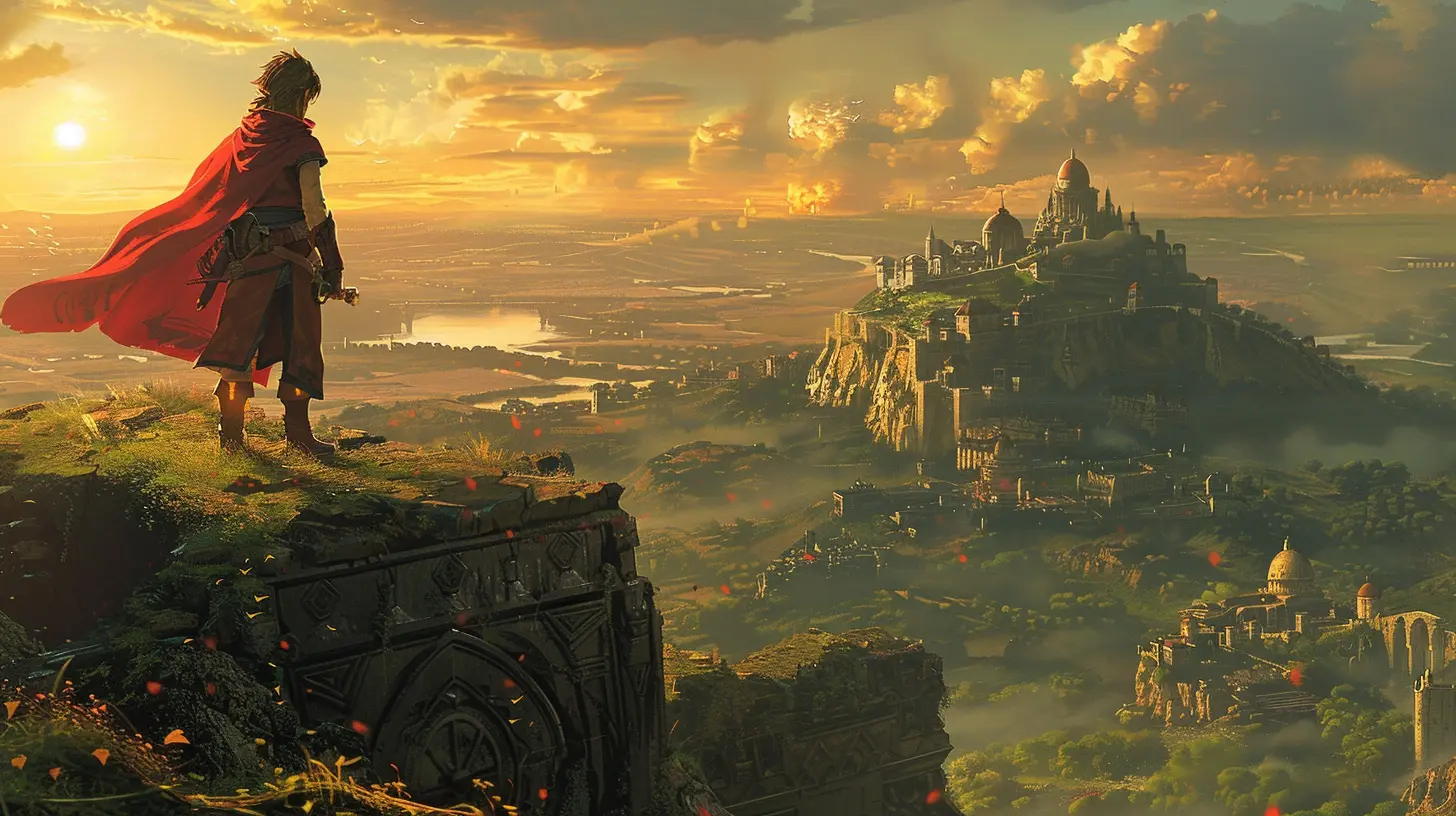
Animal Crossing: A Masked Utopia?
Okay, hear me out. Animal Crossing? Mysterious? Really?Yup. You just have to look past the cozy vibes.
You're the Only Human. Why?
You move into a town populated entirely by animals, but no one bats an eye. You even become the mayor in New Leaf. It’s all very cute… but also kinda weird. Where are the other humans? Why does Tom Nook trap you with a mortgage the second you arrive? Why can’t you ever leave your debt behind?Is It All Just a Dream?
The Dream Suite mechanic lets you visit other players’ towns in your sleep. Literally. Plus, there are theories that the entire game is a coma fantasy or an escapist dream. After all, everything resets, no one ever dies, and time works… strangely. Seasons change in real-time, but villagers never age. Eerie, huh?Animal Crossing might be the most wholesome dystopia ever made. It’s like The Truman Show, but with squirrels and a better soundtrack.
EarthBound: The King of Quirky and Cryptic
You knew this was coming.A Child’s RPG with Cosmic Horror
On the surface, EarthBound looks like a wacky little RPG with slapstick humor and shopping malls. But peel back the layers and you’ve got time travel, alien invasions, and one of the most haunting final bosses in gaming history: Giygas.The fight is abstract, screamed in glitchy text, with unsettling background music. Giygas is described as the embodiment of evil and insanity. It’s nightmare fuel hidden in a candy-colored RPG.
Ness’s Psychic Powers
Ness isn’t just good with a baseball bat—he’s psychic. The game gives you minimal explanation for his powers, and you're left to connect the dots. Some fans speculate that the whole adventure is metaphorical—a battle through childhood trauma. Others point to real-world inspirations from conspiracy theories to Japanese folklore.Either way, EarthBound’s world is like a Sunday newspaper comic turned Lovecraftian fever dream. And that’s just the beginning—the sequel, Mother 3, hits even harder with themes of loss, technological abuse, and grief.
Splatoon: A Colorful World Hiding a Dark History
Yeah, it’s all fun and games until you read the scrolls.Post-Apocalyptic Water World
Splatoon is set thousands of years after humanity goes extinct. Bet you didn’t expect that from a game about squid-kids with paint guns.The Inklings and Octolings are descendants of sea life that evolved after the oceans rose and humans vanished. Hidden lore found in Sunken Scrolls reveals tales of ancient wars, betrayal, and species oppression.
DJ Octavio and The Octoling Revolution
In Splatoon 2: Octo Expansion, you play as an Octoling who breaks free from mind control. The deeper message? Identity, freedom, and breaking away from societal expectations. All wrapped up in some of the catchiest tunes and wackiest weapons you’ll ever find.Splatoon’s world is proof that bubblegum colors can mask serious storytelling. It’s like reading Orwell in a coloring book.
Xenoblade Chronicles: Titans, Gods, and Mecha-Earth
This one’s for the JRPG aficionados.The World on a Titan’s Back
The original Xenoblade Chronicles takes place on the literal backs of two dead titans—Bionis and Mechonis—locked in eternal battle. Civilizations live on these colossal corpses. Yeah, it’s wild.As you progress, you learn that the gods behind this world were scientists from a failed Earth experiment. So, you’re technically playing inside a simulation that thinks it’s a reality built on gods who were just really bad at coding.
Existential Crises Galore
Each Xenoblade game adds more philosophical weight—free will, the nature of time, and what it means to be alive. The twist is that you’re not just exploring a fantasy world; you’re unraveling the layers of existence itself.It’s complex, it’s beautiful, and it’s a gigantic rabbit hole that fans still haven’t fully mapped out.
Why Nintendo Keeps Us Guessing
So, why does Nintendo weave these deep, mysterious worlds into games that, on the surface, seem pretty straightforward?Two reasons: immersion and curiosity.
Nintendo is a master at balancing simplicity with depth. The average player enjoys the gameplay. The curious ones? They dig deeper and find the hidden narratives, subtle lore drops, and cryptic backstories.
Maybe that's the real magic—every Nintendo game is like a treasure chest. At first, you only see a few gold coins. But dig deeper, and who knows what ancient curse or artifact you’ll uncover.
Final Thoughts
Nintendo’s worlds aren’t just playgrounds—they’re labyrinths. With every hidden scroll, timeline split, or cryptic item description, we're invited to ask questions. To wonder. To theorize.And maybe that’s the point.
Whether you're throwing Pikmin at a wall, time-traveling in Hyrule, or painting turf with ink, there’s always more beneath the surface. Nintendo doesn’t just make games—they build universes layered with mystery, loss, hope, and a touch of the surreal.
So next time you boot up your Switch and hop into a seemingly innocent adventure, remember: things may be weirder than they appear.
all images in this post were generated using AI tools
Category:
Nintendo GamesAuthor:

Francesca West
Discussion
rate this article
1 comments
Uma Henderson
I love the depth of Nintendo's lore. Excited to uncover more hidden secrets!
August 11, 2026 at 3:34 PM
Francesca West
Thanks! Nintendo really knows how to weave a compelling story. There's always something new to discover.